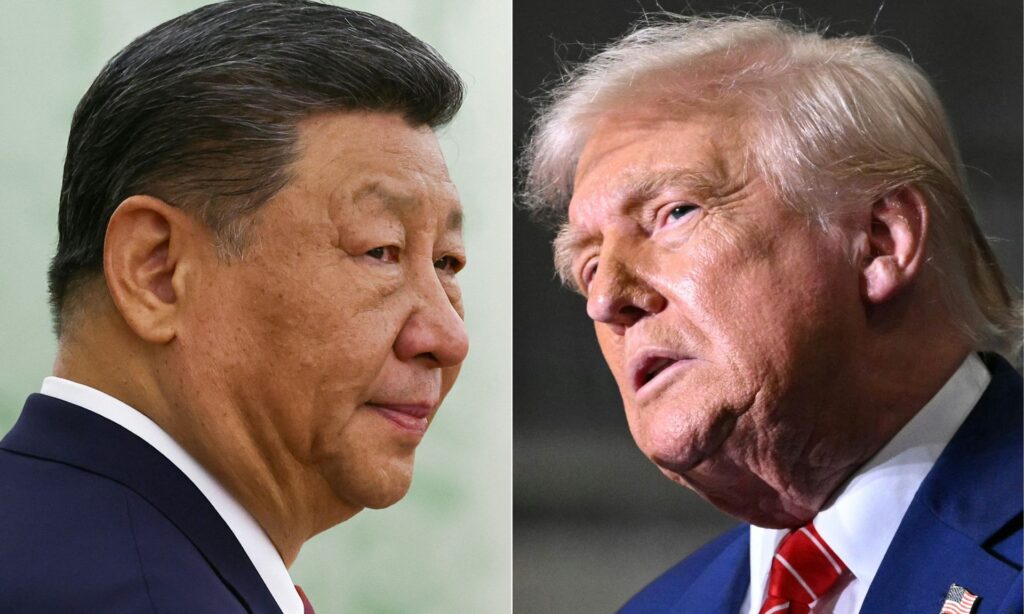
trump tariffs

U.S.–China Tensions Rise as Trump Vows Economic Retaliation on Rare Earths

A growing conflict over vital rare earth metals, which are necessary for contemporary electronics, defense systems, and technologies globally, has prompted Donald Trump to threaten economic sanctions against China. After China announced tighter export restrictions on 12 of the 17 rare earth elements—including a number of metals used in semiconductors, electric cars, and military hardware—the conflict intensified. Beijing’s action, motivated by national security concerns, requires special licenses for foreign companies to export or process goods that contain even trace amounts of Chinese rare earths. The majority of the new regulations will go into effect in December 2025.

Trump’s Reaction

In order to financially offset these new export restrictions on rare earths, President Trump denounced China’s actions as “hostile” and threatened to impose “massive increase of tariffs” on Chinese imports. Citing China’s assertive stance as a danger to the world economy and peace negotiations in other areas, he also hinted that he might call off a scheduled meeting with Chinese President Xi Jinping.

Significance of Rare Earths

Rare earth metals are essential for the production of both civilian goods like batteries, smartphones, and electric cars, as well as defense hardware like F-35 jets, Tomahawk missiles, and Predator drones. About 60% of the world’s supply and 90% of processed rare earths are produced in China, making it the dominant player. The United States also depends significantly on Chinese imports to meet its defense and technology needs.

Impact on the Economy and Markets

Following his remarks on social media, Trump’s threats have caused significant drops in major U.S. stock indices, igniting volatility in international financial markets. These events portend fresh dangers for supply chains, the technology industry, and the ongoing trade negotiations between the United States and China.

Strategic Importance

China’s tighter controls ahead of an Asia-Pacific summit appear designed to strengthen its bargaining position, giving Beijing more leverage in negotiations over trade and technology. As the biggest importer of rare earths from China, the US is under increasing pressure to diversify its supply and create domestic substitutes, particularly as these restrictions affect sectors vital to both economic competitiveness and national security.
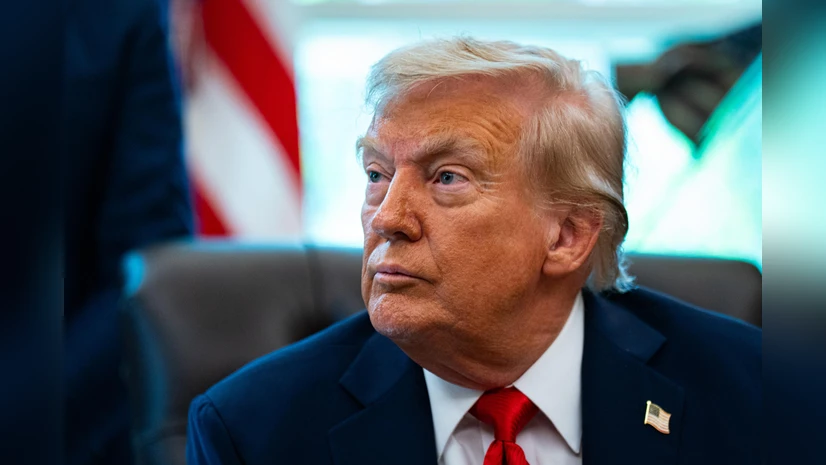
Tariff Ruling Under Fire: Trump Predicts ‘Destruction of the United States’

The majority of President Donald Trump’s significant international tariffs, particularly those imposed under emergency powers, have been declared illegal by a U.S. federal appeals court. This ruling has the potential to change trade negotiations and the president’s authority.

Background of the Tariffs

Under the International Emergency Economic Powers Act (IEEPA), Trump imposed controversial tariffs that targeted imports from China, Mexico, Canada, and India, among other major trading partners. These tariffs, which were imposed on the pretext of safeguarding American industries and changing international trade relations, were a pillar of his economic strategy.

  • Notably, Trump declared “reciprocal” tariffs of up to 50% for nations with which the United States had trade deficits, in addition to a flat 10% baseline tariff on a broad range of imports.
  • The use of emergency powers was justified by pointing to national emergencies like migration and drug trafficking.

Appeals Court Ruling

The U.S. Court of Appeals for the Federal Circuit ruled 7-4 against Trump on August 29, 2025, stating that his use of emergency powers to impose such broad tariffs went beyond what Congress permits under the IEEPA. The court declared:

  • According to the Constitution, Congress alone has the power to impose tariffs, not the President.
  • The law Trump cited, IEEPA, does not give him the authority to impose taxes or duties as he claimed.
  • The tariffs are in place until at least October while the administration files an appeal with the Supreme Court, despite earlier court rulings being upheld.

Trump’s Reactions

In response, Trump issued dire warnings, saying that lifting the tariffs would be a “complete catastrophe for the nation” and might “literally destroy the United States.” He called the ruling partisan and demanded that the tariffs stay in place while he files an appeal with the Supreme Court.

  • The Trump administration contends that the tariffs are essential for both the nation’s economic interests and national security.
  • Removing the tariffs could harm U.S. diplomacy and cause economic instability, Treasury and Commerce officials warned.

Diplomatic and Economic Consequences

Experts caution that the decision has important diplomatic and financial ramifications.

  • Refunds of billions of dollars could be demanded from importers if tariffs are reversed, as they increased to $159 billion by July 2025.
  • In talks with the European Union, the United Kingdom, Japan, and other parties, the tariffs have been a significant bargaining chip.
  • In response, foreign countries like India have modified their economic strategies and looked for new trading partners in an effort to lessen the impact.

What’s Next?

The Supreme Court may further define or restrict presidential authority in trade policy if the Trump administration files an appeal. The tariffs are mostly in effect until the Supreme Court’s ruling.

Trump would lose his more expansive authority to impose tariffs unilaterally if the Supreme Court upholds the decision, but he could use more limited legal tools (such as the Trade Act of 1974).

The balance of power between Congress and the president, as well as U.S. trade policy, will be impacted by this significant legal battle, which is expected to have an impact on the world economy in the coming months.